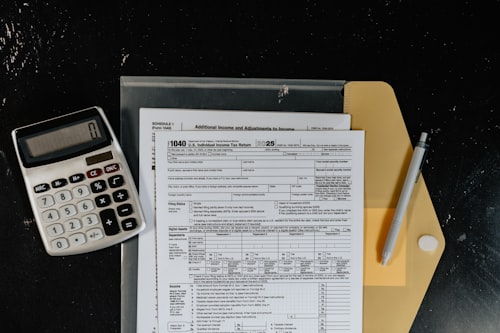
The Income Tax Department of India requires individuals and entities with taxable income to file an Income Tax Return (ITR) each year. For FY 2024-25, the filing deadline for most individuals is July 31, 2025, and for those requiring audit, October 31, 2025. Missing these deadlines results in penalties, loss of carry-forward benefits, and potential scrutiny.
Who is Required to File ITR?
Filing an ITR is mandatory for:
- Individuals with gross income exceeding the basic exemption limit (Rs. 3 lakh for those below 60 years under the new tax regime)
- Companies and firms, regardless of profit or loss
- Individuals claiming tax refunds, even if income is below the threshold
- Individuals with foreign assets or foreign income
- Those who have deposited more than Rs. 1 crore in current accounts or paid electricity bills exceeding Rs. 1 lakh during the year
- NRIs with income earned in India above the exemption limit
Important: Even if your income is below the taxable threshold, it is advisable to file a nil ITR. It serves as income proof, helps with visa applications, and keeps you in good standing with tax authorities.
Which ITR Form Do You Need?
Choosing the right ITR form is critical. Filing the wrong form leads to defective return notices. Here is a simplified guide:
- ITR-1 (Sahaj): Salaried individuals with income up to Rs. 50 lakh from salary, one house property, and other sources
- ITR-2: Individuals with capital gains, multiple properties, or foreign income
- ITR-3: Individuals with business or professional income along with other sources
- ITR-4 (Sugam): For presumptive taxation under Sections 44AD, 44ADA, 44AE
- ITR-5: Partnership firms, LLPs, AOPs, BOIs
- ITR-6: Companies (other than claiming exemption under Section 11)
Need help identifying the right ITR form for your situation? Talk to our experts — free consultation available.
Get Free ConsultationDocuments Required for ITR Filing
Gather these documents before you begin:
- PAN Card and Aadhaar number (linking mandatory)
- Form 16 from your employer (for salaried individuals)
- Form 26AS and Annual Information Statement (AIS) — available on the Income Tax portal
- Bank account statements and interest certificates
- Investment proofs for 80C, 80D, 80G deductions
- Home loan interest certificate (for Section 24 deduction)
- Capital gains statements from brokers/mutual funds
- Rental income details and municipal tax receipts (for house property)
Common Mistakes That Attract Scrutiny
Based on our experience handling thousands of ITR filings, these are the most frequent errors:
- Mismatch between Form 26AS and ITR: Any discrepancy in TDS credit is flagged immediately by the system
- Not reporting all income sources: Interest income, freelance income, capital gains — all must be declared
- Wrong ITR form: Using ITR-1 when ITR-2 is applicable leads to a defective return notice
- Not reconciling AIS data: The new AIS contains significantly more transaction data than Form 26AS — always check it
- Claiming inflated deductions: HRA, 80C, medical insurance — only claim what is genuinely applicable
- Missing the e-verification deadline: Filing without e-verifying within 30 days treats it as not filed at all
New vs. Old Tax Regime — Which Should You Choose?
From FY 2023-24 onwards, the new tax regime is the default. If you do not opt out, you are automatically under the new regime for that year. The decision depends on your income level and the deductions you can legitimately claim. As a general rule:
- New regime is better if your total deductions are less than approximately Rs. 3.5-4 lakh
- Old regime may be better if you have high HRA, home loan interest, and 80C investments
This calculation is specific to each individual — consult a CA for the right decision for your situation.
Let ASA and Company handle your ITR filing accurately and on time. Contact us for pricing and timelines.
Contact Us